
I’ll admit it: my first hydrangea barely bloomed for a couple of seasons, and I couldn’t figure out why. It turns out I was doing exactly what most gardeners do—pruning at the wrong time, without realizing different hydrangeas play by different rules.
Here’s what I eventually learned: once you know which type of hydrangea you’re growing—and whether it blooms on old wood, new wood, or both—pruning stops being a guessing game.
In this guide, I’ll walk you through exactly when and how to prune each type, based on what’s worked (and what hasn’t) in my own garden, so you can get the full, healthy blooms you’re hoping for.
When and How to Prune Hydrangeas for Better Blooms
Step 1: Identify Your Hydrangea
Before you pick up the pruning shears, you need to know which type you’re dealing with. The most common hydrangeas grown includes:
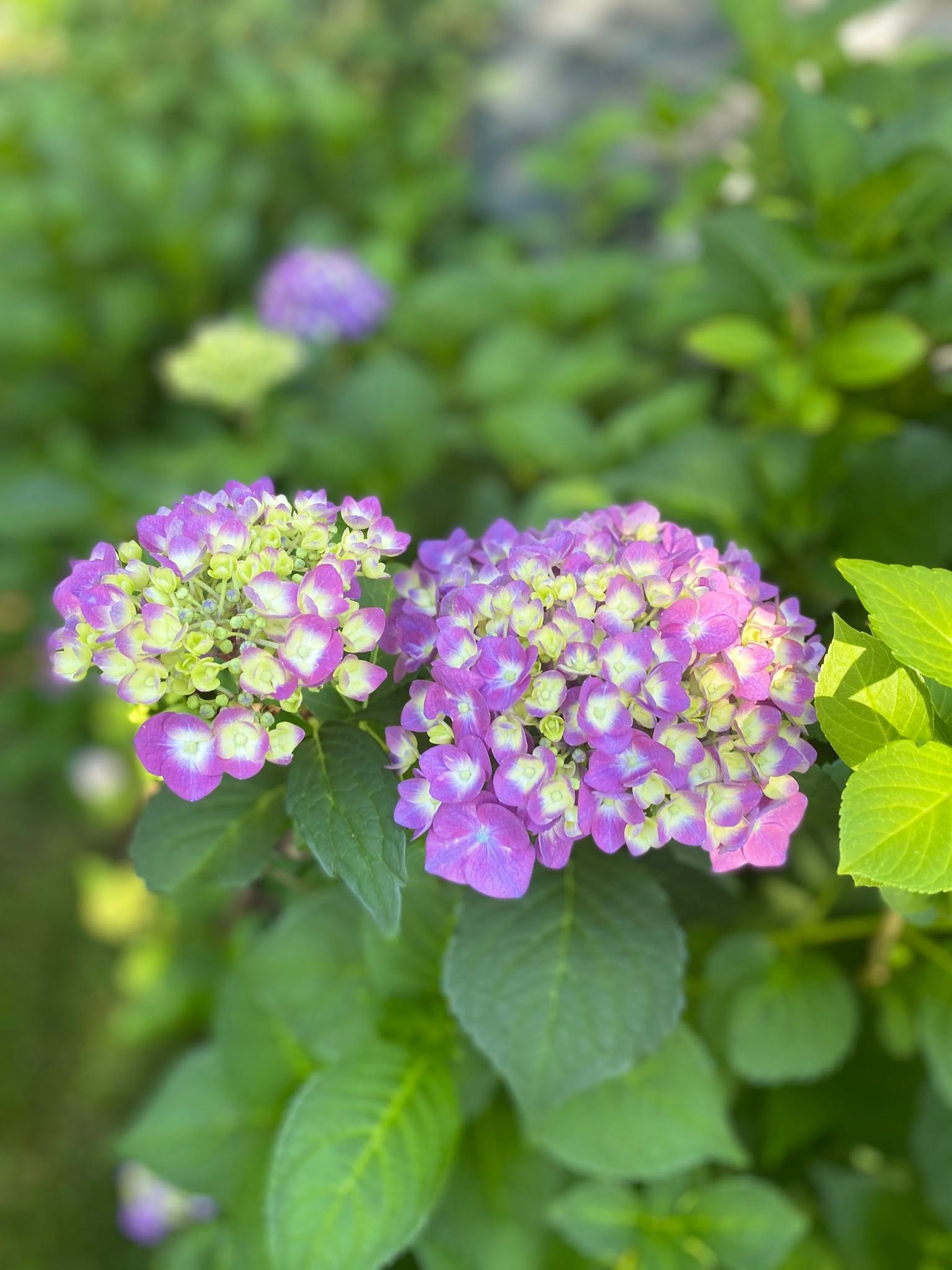
Bigleaf hydrangea — Includes mophead and lacecap varieties, known for large, rounded or flat-topped flower clusters in shades of blue, pink, purple, or white.
Panicle hydrangea — Produces cone-shaped flower clusters that often open white or green and gradually turn pink, red, or burgundy. Popular cultivars include ‘Limelight’ and ‘PeeGee.’
Smooth hydrangea — Native to the eastern United States, this hydrangea produces rounded flower clusters that emerge pale green and mature to white. ‘Annabelle’ is a classic and widely grown cultivar.
Oakleaf hydrangea — Native to the southeastern United States, this shrub is known for its distinctive oak-shaped leaves and elongated clusters of white flowers that gradually age to pink or rose.
Climbing hydrangea — A woody vine with lacy white flower clusters, commonly grown against walls, fences, and trellises.
Mountain hydrangea — Similar to bigleaf hydrangea, with smaller leaves and lacecap-style flowers. Some cultivars are also reblooming.
If you’re not sure which type you have, look at the leaf shape, flower form, and growth habit. You can also check the plant tag or search for the cultivar name.
Identification matters because it determines when and how much you should prune.
Related Posts:
Step 2: Determine Whether It Blooms on Old or New Wood
This is the single most important factor in pruning hydrangeas correctly.
Old-wood bloomers form their flower buds on stems that grew during the previous season.
Pruning these plants at the wrong time can remove the flower buds that would have produced blooms in the following season.
New-wood bloomers form their flower buds on the current season’s growth. Because these buds develop after spring growth begins, these hydrangeas can generally be pruned in late winter or early spring without removing the coming season’s flowers.
Some hydrangeas, particularly certain bigleaf and mountain hydrangea cultivars, are reblooming (also called remontant).
These varieties can produce flowers on both old and new wood, giving you more flexibility when pruning and potentially a longer flowering season.
Here’s how the common types generally break down:
Hydrangea type |
Blooms on |
| Bigleaf (H. macrophylla) | Old wood; some reblooming cultivars flower on old and new wood |
| Panicle (H. paniculata) | New wood |
| Smooth (H. arborescens) | New wood |
| Oakleaf (H. quercifolia) | Old wood |
| Climbing (H. anomala subsp. petiolaris) | Old wood |
| Mountain (H. serrata) | Old wood; some reblooming cultivars flower on old and new wood |
If you’re unsure whether your bigleaf or mountain hydrangea is a reblooming variety, check the plant tag or cultivar name. Terms such as “reblooming” or “repeat blooming” can be useful clues.
Step 3: Choose the Right Time to Prune
New-wood bloomers: Panicle and smooth hydrangeas
Prune these in late winter or early spring, while they’re still dormant and before significant new growth begins.
The exact timing depends on your climate. The key is to prune before the plant breaks dormancy rather than following a fixed calendar date.
Old-wood bloomers: Bigleaf, oakleaf, climbing, and mountain hydrangeas
Prune these immediately after flowering, rather than waiting until fall, winter, or early spring.
These hydrangeas form their flower buds for the following year on older stems. Waiting too long to prune can remove those developing buds and result in fewer flowers the following season.
Reblooming varieties
Reblooming bigleaf and mountain hydrangeas generally need little pruning.
You can remove spent flowers after the first flush of blooms and lightly shape the plant if necessary.
Avoid heavy pruning in late winter because it can remove the older stems that produce the earliest flowers.
Pruning Basics
Dead, damaged, or diseased stems can be removed whenever necessary, regardless of hydrangea type.
A better rule of thumb: Don’t rely on bloom time alone to determine when to prune. Identify the hydrangea and determine whether it flowers on old wood, new wood, or both.
Step 4: Learn the Correct Pruning Technique
Whatever type you’re pruning, good technique makes a difference.
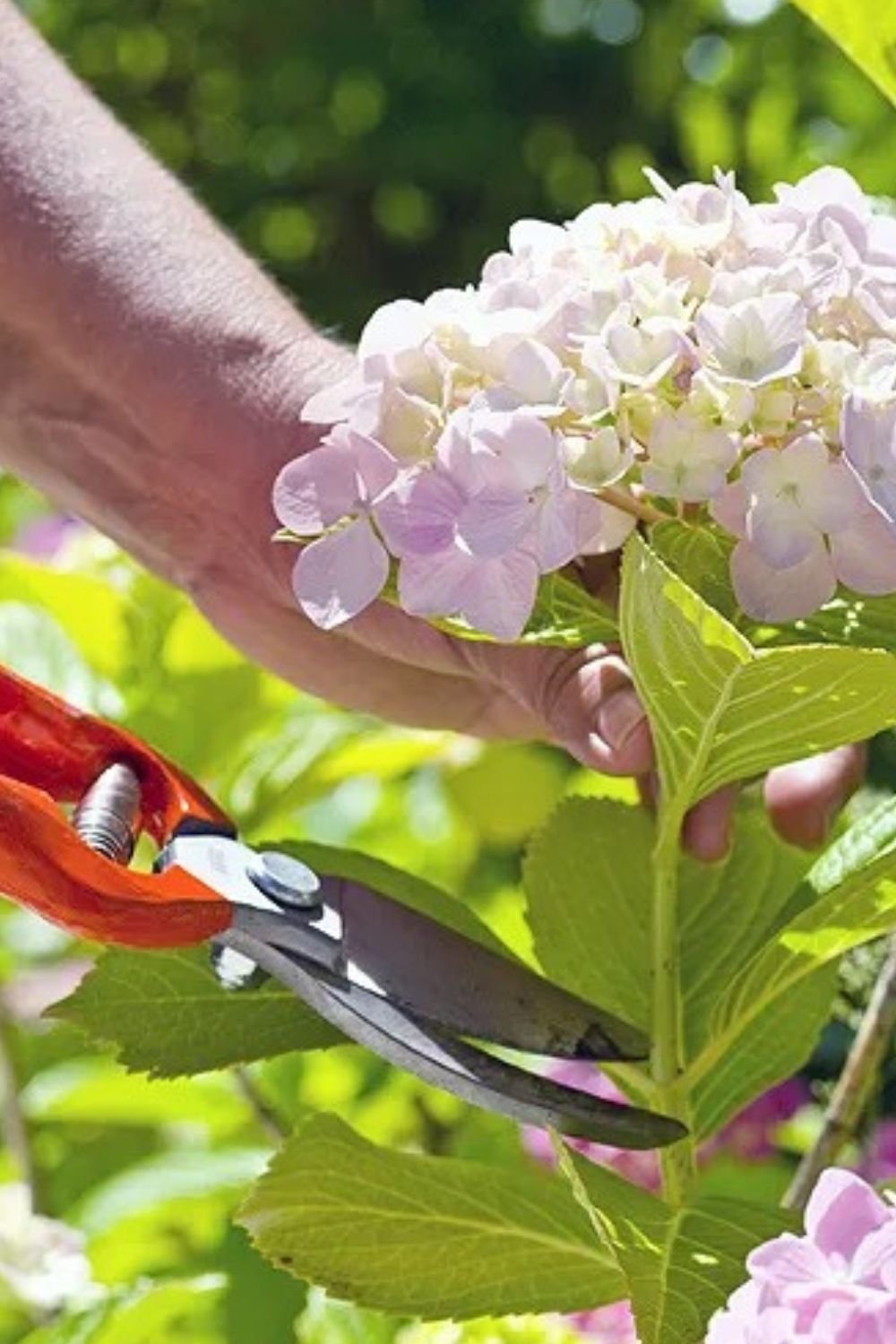
Use clean, sharp bypass pruners (I Use Felco) for smaller stems and loppers for larger branches. Clean your tools before moving between plants, especially when removing diseased growth.
Make your cuts just above a healthy bud or leaf node. A slight angle helps water run off the cut rather than sitting on the cut surface.
Remove the three Ds first: dead, damaged, and diseased wood. Cut damaged or diseased stems back to healthy tissue.
Thin before you shorten. When appropriate for the type, remove a few of the oldest stems at ground level rather than simply shortening every branch.
This helps maintain a naturally shaped shrub and encourages fresh growth from the base.
Don’t automatically remove one-third of the plant. The amount you should remove depends on the type of hydrangea.
Old-wood bloomers generally need very little pruning, while new-wood bloomers can tolerate more substantial cuts.
Deadhead spent flowers when appropriate. Remove faded flower heads by cutting just above a healthy pair of leaves or buds.
On old-wood hydrangeas, avoid cutting too far down the stem because next year’s flower buds may already be developing below the spent bloom.
Step 5: Prune Your Specific Type
Bigleaf hydrangea (old wood)
Bigleaf hydrangeas generally require very little pruning.
After flowering, remove spent flower heads and, if needed, remove a few of the oldest stems at the base. Avoid cutting back healthy, flowering stems extensively because they may already be carrying next year’s flower buds.
If you’re unsure how your bigleaf hydrangea flowers, it’s safer to prune lightly or not at all beyond removing dead wood and spent flowers.
Reblooming cultivars are more forgiving because they can also produce flowers on new growth.
Panicle hydrangea (new wood)
Panicle hydrangeas can be pruned in late winter or early spring before new growth begins.
For a mature shrub, shorten last year’s growth by roughly one-third if needed, making your cuts just above strong buds. You don’t need to cut every stem back to the same height.
Older, overgrown plants can tolerate more substantial rejuvenation pruning, but avoid making severe cuts every year. A lighter approach generally produces a stronger, more naturally shaped shrub.
Because panicle hydrangeas bloom on new wood, pruning them in late winter won’t remove the flower buds for the coming summer.
Smooth hydrangea (new wood)
Smooth hydrangeas are also relatively tolerant of hard pruning.
In late winter or early spring, you can cut the previous season’s stems back substantially to encourage vigorous new growth.
Leaving several inches of woody stem above the ground rather than cutting everything flush to the soil can help provide a sturdy framework for the new growth.
For cultivars such as ‘Annabelle,’ hard pruning can encourage strong new stems and large flower heads. However, excessively aggressive pruning can sometimes result in weak stems that struggle to support the large blooms.
Oakleaf hydrangea (old wood)
Oakleaf hydrangeas need very little pruning.
Prune immediately after flowering, removing dead or damaged branches and lightly shaping the shrub if necessary.
Avoid heavy pruning because oakleaf hydrangeas form their flower buds on old wood. A major cutback can mean sacrificing the following year’s flowers.
Climbing hydrangea (old wood)
Climbing hydrangeas generally need little pruning once established.
After flowering, remove damaged or unwanted growth and trim branches that have grown beyond their allotted space.
Because the plant flowers on old wood, avoid heavy pruning in fall, winter, or early spring if you want to preserve next year’s flowers.
Mountain hydrangea (old wood)
Treat mountain hydrangeas much like bigleaf hydrangeas.
Prune lightly immediately after flowering, removing spent flower heads and a few of the oldest stems if necessary. Avoid substantial pruning in fall or early spring because the plant may already have formed next year’s flower buds.
If you have a reblooming cultivar, follow the pruning recommendations for that specific variety.
Step 6: Avoid These Common Pruning Mistakes When Pruning Hydrangeas
Pruning old-wood bloomers in fall, winter, or early spring – This is one of the most common reasons bigleaf, oakleaf, mountain, and climbing hydrangeas fail to bloom.
Shearing the shrub into a tight ball – This removes natural branching structure and can eliminate flower buds on old-wood types. Selective pruning is usually a better approach.
Pruning every hydrangea the same way – A pruning method that works well for a panicle hydrangea can drastically reduce flowers on a bigleaf or oakleaf hydrangea.
Cutting reblooming hydrangeas too aggressively – Although reblooming varieties can flower on new growth, heavy pruning can still remove the old stems responsible for the earliest flowers.
Ignoring winter damage – In colder USDA Hardiness Zones, particularly where temperatures regularly cause dieback, old-wood hydrangeas may lose flower buds during winter regardless of how carefully you prune. Protecting vulnerable plants from severe winter conditions can help preserve those buds.
Pruning too late in the season – Waiting until late summer or fall to prune an old-wood hydrangea can remove flower buds that are already developing for the following year.
The Bottom Line
Successful hydrangea pruning comes down to one important question: Does your hydrangea bloom on old wood, new wood, or both?
Old-wood hydrangeas generally need light pruning immediately after flowering. New-wood hydrangeas can be pruned in late winter or early spring before new growth begins.
Reblooming varieties fall somewhere in between and usually need only light pruning.
Get the timing right, use clean, sharp tools, and resist the urge to cut more than necessary. Your hydrangea will have a much better chance of producing the full, reliable blooms you’re hoping for year after year

Hey there, I’m Derek Schew, a writer for Lawnholic.com, where we cover everything and anything related to lawns. As someone who’s spent countless hours tending to my own lawn, I’m passionate about sharing my knowledge and helping others achieve the perfect yard. From lawn care tips to product reviews, I’m committed to providing our readers with the most accurate and up-to-date information available. So whether you’re a seasoned lawn enthusiast or just getting started, I invite you to join our community and discover the joys of a lush, green lawn.